I- Introduction
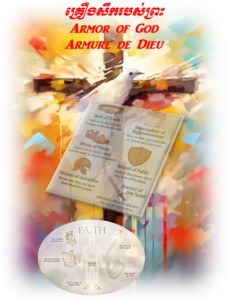
The Armor of God, described by the Apostle Paul in Ephesians 6:10–20, is a powerful spiritual metaphor. It calls Christians to clothe themselves with the virtues of faith in order to stand firm against trials and the forces of evil, symbolizing God’s daily protection over the believer.
Ephesians 6:20 “for which I am an ambassador in chains. Pray that I may declare it fearlessly, as I should.”
Imagine the scene: Rome, first century A.D. The Apostle Paul is in chains, guarded day and night by a Roman legionary. Before his eyes gleam a heavy breastplate, a massive shield, an iron helmet, and a sharp sword. To most people, these were symbols of the Roman Empire’s military might. But to Paul, they became a profound spiritual revelation.
In his letter to the Ephesians, Paul brilliantly transforms this military imagery into a message of spiritual victory and peace. Many mistakenly read Ephesians 6 as a call to holy war or physical confrontation. In reality, it teaches exactly the opposite. Paul makes it clear that our struggle is “not against flesh and blood” (Ephesians 6:12 “For our struggle is not against flesh and blood, but against the rulers, against the authorities, against the powers of this dark world and against the spiritual forces of evil in the heavenly realms.”). The Christian’s battle is not fought against people, but against spiritual forces of evil.
How, then, are believers to fight this invisible battle? By replacing weapons of iron with the virtues of faith. Each piece of the soldier’s armor becomes a symbol of a spiritual reality that God provides to strengthen and protect His people.
Paul concludes this metaphor by emphasizing that constant prayer is what keeps the armor of God active and effective. Through prayer, believers remain spiritually vigilant, draw strength from the Lord, and stand firm in the power of His grace.

Prayer:
Lord, I want to put on the full armor of God and stand firm against all attacks of the Enemy. Thank You, Lord, for the belt, the breastplate, the shoes, the shield, the helmet, and the sword of Your Word! Teach me to stand firm and put the Enemy to flight!
In the Name of Jesus, Amen!
II- Reflection
Balance between Armor and Virtues
The Armor of God emphasizes its divine source. The Greek text uses the expression panoplia tou Theou (“the whole armor of God”). It is an armor that God provides, and that believers are called to put on. This reminds us that our strength does not come from ourselves, but from God’s superior spiritual protection.
The armor also represents a complete and interconnected system of defense. If a soldier lays aside the shield or the helmet, he becomes vulnerable. For this reason, Paul repeatedly urges believers to put on the whole armor of God, not just selected pieces.
The metaphor of the armor assumes a context of spiritual conflict, trial, and opposition. Its purpose is not to encourage aggression, but to enable believers to “stand firm” against the attacks of the enemy.
By contrast,
the Virtues of Faith emphasize the believer’s inner moral and spiritual qualities, such as righteousness, truth, and peace. These virtues are dispositions of the heart and character, cultivated and strengthened through faith and the work of the Holy Spirit.
Unlike the armor, which functions as a unified whole, virtues are often viewed individually. A believer may grow in patience, righteousness, or kindness over time, even though Christian theology understands all of these virtues as interconnected and rooted in faith.
Finally, the concept of virtue is closely associated with everyday Christian living. It describes the lifelong process of spiritual growth, the pursuit of holiness, and the gradual transformation of the believer into the likeness of Christ.
In The Genius of Christianity, Chateaubriand devotes a significant section to a poetic reflection on the three theological virtues: Faith, Hope, and Charity (Love). He explains that ancient philosophy, particularly that of Greece, exalted virtues such as physical strength, courage, and human reason. Christianity, by contrast, transformed the moral vision of the world by placing Faith at the very heart of the believer’s inner armor.
For Chateaubriand, faith is the source of all virtues and the only true power capable of producing unwavering moral conviction. It is faith that gives meaning and strength to hope, charity, and every other Christian virtue.
Although he never states it explicitly, Chateaubriand suggests that the medieval ideal of the armored knight is, in many ways, a human attempt to embody in history the spiritual armor described by the Apostle Paul in Ephesians 6. The knight’s armor symbolizes not merely physical protection, but the Christian calling to be clothed with faith, righteousness, truth, and the other virtues that equip believers for their spiritual battle.
It is a magnificent example of how Paul’s metaphor has spanned the centuries to inspire great French literature!
Decoding the equipment of the Armor of God
The Apostle Paul employs the metaphor of spiritual armor and weaponry in several other letters, although Ephesians 6 remains the most extensive and detailed description. The same concept of moral and defensive combat runs through his entire theology. Paul did not invent this imagery simply by observing Roman soldiers; in fact, he draws upon the Old Testament—specifically the Book of Isaiah—where God Himself dons this armor to deliver His people (e.g., Isaiah 59:17; Isaiah 11:5).
Here are the six pieces of this armor, directly inspired by the gear of a Roman soldier:
- The belt of truth: It holds the entire outfit in place. It symbolizes integrity, honesty, and adherence to the Word of God.
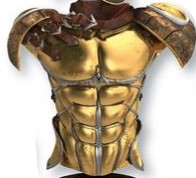
- The breastplate of righteousness: It protects vital organs and the heart. It represents the moral uprightness and purity of conduct that come through faith.
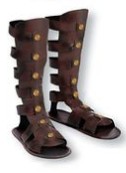
- The shoes of peace: Fitted with studs, they ensure the soldier’s stability on the battlefield. They symbolize readiness to spread the Gospel and inner serenity.
- The shield of faith: Essential for parrying attacks, it allows one to extinguish all the “flaming arrows” of evil. It symbolizes unwavering trust in God.
- The helmet of salvation: It protects the head. It represents the assurance of deliverance and the protection of one’s thoughts.
- The sword of the Spirit: This is the only offensive weapon in the arsenal. It symbolizes the Word of God, used to advance and to repel temptations.
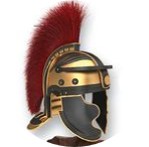

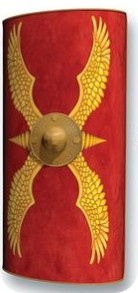
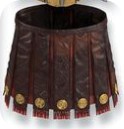
Metaphor of Armor of GOD
The Helmet of salvation
The Sword of the spirit
The Shield of Faith
The Shoes of the Gospel of Peace
The Belt of Truth
The Breathplate of Righteousness
1- The Belt of Truth
The Belt of Truth: The Foundation of the Whole Armor
Paul begins his description of the armor of God with a significant exhortation:
“Stand firm then, with the belt of truth buckled around your waist” (Ephesians 6:14).
This command is not trivial. The belt is the first piece of armor mentioned because it supports all the others. Without it, the soldier can neither move effectively nor keep his equipment in place.
The Roman Soldier’s Belt
For the Roman legionnaire, the belt (*cingulum* or *balteus*) was not merely an ornament. It served several essential functions.
- It allowed the long tunic to be hitched up and secured, freeing the soldier’s movements and preventing him from tripping during combat.
- It supported the sword and helped keep the breastplate fitted snugly against the body.
- It provided stability and cohesion to the entire military outfit.
Without the belt, the armor lost its effectiveness, and the soldier quickly became vulnerable.
The Spiritual Meaning of the Belt
For Paul, this belt represents truth. In Scripture, truth is not limited to knowledge or accurate doctrines; it possesses several complementary dimensions.
1. Truth Revealed in Jesus Christ
Above all, truth is revealed in Jesus Christ Himself, who declares:
“I am the way and the truth and the life” (John 14:6).
To put on the belt of truth is, therefore, to remain firmly attached to Christ and His Gospel. The Word of God becomes the foundation upon which the entire Christian life rests.
2. Truth as Integrity of Life
Truth is also expressed in one’s way of life. The believer is called to walk in sincerity—without hypocrisy, lies, or duplicity. Wearing the belt of truth means living with an upright heart before God, speaking honestly, and acting consistently. Faith does not remain merely a verbal profession; it becomes a visible reality in the believer’s entire conduct.
3. Truth as protection against error
We live in a world abounding with lies, illusions, and half-truths. Those who are not firmly rooted in God’s truth easily become unstable, susceptible to influence, and vulnerable to spiritual deception.
Conversely, truth grants the believer solid discernment. It enables them to recognize error, resist false doctrines, and stand firm in the faith.
The foundation of the entire Christian life
The belt is the first piece of armor because it ensures the stability of all the others. Likewise, truth is the foundation of all Christian virtues. Righteousness, peace, faith, and hope can only flourish if they are rooted in the truth revealed by God.
To put on the belt of truth is, therefore, to choose to live each day in the truth of Jesus Christ, to hold fast to His Word, and to walk with integrity before God and people. It is upon this foundation that the entire spiritual armor derives its stability and effectiveness.
2- The Breathplate of Righteousness
The Breastplate of Righteousness: Protecting the Heart of the Believer
Paul continues the description of the armor of God by exhorting believers to put on the breastplate of righteousness (Ephesians 6:14 “with the breastplate of righteousness in place“). If the shield is used to repel attacks coming from afar, the armor protects the soldier in close combat. It covers the most vital organs, particularly the heart and lungs.
The Roman soldier’s breastplate
In Paul’s time, Roman legionaries often wore a lorica segmentata, a breastplate made of large hinged iron plates. Strong and resistant, it protected the most vulnerable parts of the body. A wound to the arm could weaken a soldier, but a wound to the heart was usually fatal.
Paul draws on this image to teach that the believer must protect his heart, that is, the center of his spiritual life, his thoughts, his emotions and his will.
The spiritual meaning of the breastplate
In the Bible, justice does not just mean equity or human courts. It has two complementary dimensions.
1. Righteousness received: our justification before God
The first is the righteousness that God freely grants to those who put their faith in Jesus Christ. By grace the believer is declared righteous before God and reconciled to Him (Romans 5:1 “Therefore, since we have been justified through faith, we have peace with God through our Lord Jesus Christ, “).
This justice constitutes a true protection for the heart. It allows you to resist accusations, guilt and discouragement. When the enemy seeks to make people believe, “You are not worthy of God,” the believer responds with confidence that he is justified not by his own merits, but by the perfect work of Jesus Christ.
2. Justice lived: a life of integrity
The second dimension is practical justice, that is, a life conforming to the will of God. The believer seeks to live in honesty, righteousness, love and obedience.
Such a life also becomes a protection. By walking in integrity, the Christian avoids giving way to sin, scandal or accusations. His conscience remains peaceful and his testimony remains credible.
Interior protection
So the breastplate of righteousness protects the believer’s heart in two ways. The righteousness received gives him the assurance of his salvation in Christ, while the righteousness experienced strengthens his communion with God and preserves his testimony before men.
To put on the breastplate of justice is therefore to live each day in the security of God’s grace and in fidelity to his will. This is how the heart remains protected and how the believer can stand firm against spiritual attacks.
3- The Shoes of the Gospel of Peace
The Shoes of the Gospel of Peace: Standing Firm and Walking in Mission
Paul continues his description of the armor of God by writing:
“And with your feet fitted with the readiness that comes from the gospel of peace.” (Ephesians 6:15)
This image may seem paradoxical. Why would combat footwear be associated with a Gospel of peace? Paul thereby shows that the Christian does not fight to wage war against people, but to proclaim the peace that God offers in Jesus Christ.
The Roman Legionnaire’s Footwear
Roman soldiers wore *caligae*—sturdy military sandals designed for long marches and combat.
Their soles were studded with iron nails, similar to the cleats on modern shoes. These nails provided excellent traction, allowing the soldier to remain upright on muddy, rocky, or slippery terrain.
This footwear also gave the legionnaire great mobility. Thanks to it, Roman armies could cover vast distances without becoming exhausted or injured.
Paul uses this image to show that the believer is called to be both firmly grounded and always ready to move forward.
The Spiritual Meaning of the Shoes
The shoes of the Gospel of Peace symbolize two complementary realities.
1. Stability Founded on Peace with God
The first is spiritual stability.
Through faith in Jesus Christ, the believer is reconciled with God:
“Therefore, since we have been justified through faith, we have peace with God through our Lord Jesus Christ.” (Romans 5:1)
This peace is not merely an inner feeling. It is an objective reality born of the work of the Cross. Because God has reconciled the believer to Himself, the believer can stand firm amidst trials. Much like the hobnails on a Roman soldier’s sandals, this peace prevents the Christian from slipping when difficulties, temptations, or opposition arise. It provides the stability needed to “stand firm”—a central theme throughout the passage in Ephesians 6.
2. Readiness to proclaim the Gospel
Footwear serves not only for standing one’s ground but also for walking.
The word translated as “zeal” conveys the idea of readiness, eagerness, or constant preparedness. Believers are called to be always ready to proclaim the Gospel of peace—that is, the good news of the reconciliation God offers the world through Jesus Christ.
This mission is accomplished neither through coercion nor violence. The Christian walks in the footsteps of the Prince of Peace, bearing a message of forgiveness, grace, and hope. Their witness relies as much on their words as on a life transformed by the Gospel.
A peace that enables us to stand and to walk
The footwear of the Gospel of peace beautifully encapsulates the Christian life.
It grants the believer inner stability—rooted in the peace secured by Christ—and a missionary mobility that makes them ready to share that peace with others.
To put on the footwear of the Gospel of peace is to remain firmly rooted in the reconciliation Jesus accomplished on the cross, while staying ready to proclaim that same peace to everyone God places in our path.
4- The Shield of Faith
The Shield of Faith: Protection Against the Attacks of the Evil One
Paul continues his description of the armor of God by declaring:
“In addition to all this, take up the shield of faith, with which you can extinguish all the flaming arrows of the evil one.” (Ephesians 6:16)
After the belt, the breastplate, and the footwear, Paul introduces the shield—the Roman soldier’s primary defensive weapon. Unlike the other pieces of armor, which are fixed to the body, the shield is mobile. It is constantly positioned toward the enemy to intercept attacks before they reach the soldier.
The Roman Legionnaire’s Shield
The shield Paul refers to is the *scutum*—called *thureos* in Greek, a word literally meaning “door” due to its large size.
Standing about 1.20 meters tall, it protected almost the soldier’s entire body. Made of wood and covered in leather, it offered excellent protection against swords, spears, and—above all—flaming arrows.
Before certain battles, soldiers would dampen the leather of their shields. Thus, when an incendiary arrow struck, the fire would be extinguished almost immediately. Without this protection, the shield could catch fire and become a danger in itself.
This practice perfectly illustrates the imagery Paul chose.
The Flaming Arrows of the Evil One
The “flaming arrows” do not refer to physical weapons, but rather to the many spiritual attacks a believer faces.
These arrows can take many different forms:
a sudden doubt regarding God’s faithfulness;
deep discouragement following a failure;
persistent guilt that causes one to forget God’s forgiveness;
fear of the future or of suffering;
a temptation seeking to turn the believer away from obedience; lies that call into question their identity as a child of God.
Like flaming arrows, these thoughts seek to pierce the heart and consume the believer’s peace, joy, and confidence.
Faith: a living trust in God
Faced with these attacks, Paul calls upon believers to take up the shield of faith.
Faith is not merely an intellectual assent to doctrinal truths. It is a living, persevering trust in God’s character, promises, and faithfulness as revealed in Jesus Christ.
When doubt whispers:
“God has abandoned you.”
faith answers:
“I will never leave you nor forsake you.” (Hebrews 13:5)
When fear asserts:
“You won’t be able to hold out.”
faith proclaims:
“I can do all things through Him who strengthens me.” (Philippians 4:13)
Thus, faith does not deny difficulties. It chooses to look beyond circumstances and rely on God’s promises. It extinguishes the fire of lies with the truth of the Gospel.
A faith lived out in community
The shield also has a collective dimension.
Roman soldiers knew how to lock their *scuta* together to form the famous formation known as the “tortoise” (*testudo*). The shields interlocked, creating an almost impenetrable defense against enemy projectiles.
This image reminds us that Christian faith is never merely an individual matter. God has placed us in the Church so that we may support one another.
When a believer’s faith is weakened by trials, the faith of their brothers and sisters can sustain them through prayer, encouragement, the Word of God, and fellowship. Together, believers become more resilient against the attacks of the evil one than any could be in isolation. A faith that protects without eliminating the battles
The shield of faith does not promise a life free from difficulties. The arrows keep flying. Trials, temptations, and opposition remain a reality of the Christian life.
Yet faith strips them of their destructive power. By remaining steadfast in Christ and His promises, the believer can navigate these battles without losing the peace God gives.
Taking up the shield of faith means choosing each day to trust more in God’s faithfulness than in circumstances, emotions, or the lies of the Evil One. This trust—nourished by God’s Word and strengthened through fellowship within the Church—enables the believer to stand firm until the victory Christ has already won.
5- The Helmet of salvation
The helmet of salvation: protecting your intelligence and your hope
Paul concludes the presentation of defensive weapons with this exhortation:
“Take the helmet of salvation» (Ephesians 6:17)
The helmet is the last piece of armor that the soldier puts on before entering combat. It protects the most exposed and most precious part of the body: the head. Without this protection, the slightest blow can disorient the soldier and render him unable to continue the fight.
The helmet of the Roman legionnaire
The Roman helmet (galea) was made of bronze or iron. It didn’t just protect the top of the head; it also covered the temples, cheeks and neck with securely attached metal plates.
This protection was essential. A head injury could result in loss of vision, balance or lucidity, rendering the soldier unable to fight effectively.
Paul uses this image to teach that the believer must protect his intelligence, that is to say the place of his thoughts, his discernment, his memory and his hope.
Salvation: a certainty that protects the spirit
The helmet represents above all the assurance of salvation.
In another letter, Paul speaks of
“helmet of the hope of salvation” (“But since we belong to the day, let us be sober, putting on faith and love as a breastplate, and the hope of salvation as a helmet.” 1 Thessalonians 5:8).
This precision is important. The helmet is not used to obtain salvation; it reminds the believer that his salvation already rests on the accomplished work of Jesus Christ.
Because Christ died and rose again, the believer can live with the certainty that he belongs to God and will participate fully in the glory to come. This hope becomes a protection against discouragement and despair.
Protect your thoughts
Spiritual battle often takes place in the mind.
Thoughts of fear, guilt, doubt, or despair seek to invade the heart of the believer. Added to this are the many voices of our time that exalt self-sufficiency, fuel anxiety or reduce existence to a purely earthly horizon.
The helmet of salvation protects the believer against these influences. He continually reminds him of his identity in Christ:
- he is forgiven;
- he is adopted as a child of God;
- he is reconciled with his heavenly Father;
- he has eternal hope.
This confidence renews his way of thinking and prevents him from letting circumstances define his worth or his future.
A hope looking to the future
Salvation has, in Paul, both a present and future dimension.
The believer is already saved by grace (Ephesians 2:8), but he still awaits the definitive accomplishment of this salvation at the return of Christ (Romans 13:11; Philippians 3:20-21).
The helmet thus reminds us that the Christian’s gaze does not remain fixed on the present difficulties, but on the promise of God. This hope gives him the strength to persevere in the midst of trials.
An intelligence renewed by the Gospel
Wearing the helmet of salvation also means letting the Gospel transform our way of thinking.
Paul exhorts believers:
“Be transformed by the renewal of your mind. » (“Do not conform to the pattern of this world, but be transformed by the renewing of your mind. Then you will be able to test and approve what God’s will is—his good, pleasing and perfect will.” Romans 12.2)
Salvation not only changes our eternal destiny; it gradually renews our way of seeing God, of seeing ourselves and of understanding the world. The Holy Spirit enlightens our intelligence so that our thoughts are increasingly conformed to those of Christ.
Protection to stand firm
The helmet of salvation therefore protects the believer on two complementary levels. It gives him the certainty of his present salvation, based on the perfect work of Jesus Christ, and the hope of his full future redemption, when the Lord returns in his glory.
To put on the helmet of salvation is to keep one’s mind and heart firmly anchored in the promises of God. This assurance protects the believer against doubt, discouragement and the lies of the evil one, while allowing him to move forward with confidence toward the fulfillment of the salvation that God has prepared for those who belong to him.
A remarkable progression of armor
We can notice a progression in the first five pieces of armor:
- The belt of truth establishes the foundation.
- The breastplate of righteousness protects the heart.
- The shoes of the Gospel of peace give stability and availability for mission.
- The shield of faith repels external attacks.
- The helmet of salvation protects thoughts and nourishes hope.
The believer’s entire person is thus guarded: his convictions, his heart, his walk, his confidence and his intelligence. This progression naturally prepares the last piece of the armor, the sword of the Spirit, the only offensive weapon, which allows not only to resist, but also to respond to attacks with the Word of God.
6- The Sword of the spirit
The Sword of the Spirit: The Power of God’s Word in Spiritual Warfare
After presenting the various pieces of armor designed to protect the believer, Paul introduces a unique element:
“Take… the sword of the Spirit, which is the word of God.” (Ephesians 6:17)
Unlike the other pieces of armor, the sword is the only instrument that can serve for both defense and counterattack. Yet, Paul does not portray the Christian as a conqueror armed to attack other people. His imagery remains entirely consistent with the passage as a whole: the believer is called to stand firm (Ephesians 6:11, 13, 14), not to wage war against human beings.
The Roman Soldier’s Sword
The choice of the Greek word is particularly revealing.
Paul does not use *rhomphaia*—the large sword used on the battlefield to strike from a distance or to conquer territory. Instead, he employs the term *machaira*, a short sword worn at the legionnaire’s belt.
The *machaira* was a maneuverable weapon, suited for close-quarters combat. Its primary purpose was to repel an adversary who had come too close and to protect one’s own life. Its use suggests self-defense rather than conquest.
This historical detail sheds light on Paul’s thinking: the Christian is not given a weapon intended to dominate others, but an instrument to withstand spiritual attacks.
The Sword of the Spirit: The Word God Puts in Our Mouths
Paul specifies that this sword is “the word of God.”
The Greek word used here is *rhēma*, which refers to a spoken word, a specific declaration, or a word applied to a particular situation. It differs from *logos*, which refers more broadly to the Word of God in its entirety. The sword of the Spirit is, therefore, the Word of God—known, meditated upon, believed, and proclaimed at the opportune moment under the action of the Holy Spirit.
In other words, the believer does not merely wield biblical knowledge; he responds to spiritual attacks by relying on God’s truths, made alive and relevant by the Spirit.
Jesus: the perfect model
The best example of this usage is found in the temptation of Jesus in the wilderness (Matthew 4:1–11).
With each temptation, Satan seeks to sow doubt, divert Jesus from His mission, or offer Him an easier path.
Jesus responds with neither violence nor human reasoning.
Three times, He simply replies:
“It is written…”
To every lie, He counters with a truth from Scripture.
To every attempt at seduction, He points back to His Father’s will.
To every attack, He allows the Word of God to assert its authority.
Thus, Jesus demonstrates that the true power of the sword of the Spirit lies not in human strength, but in the authority of divine truth.
A weapon directed against lies, never against people
The sword of the Spirit is never intended to wound human beings.
Paul clearly reminds us that our struggle is not “against flesh and blood” (Ephesians 6:12 “For our struggle is not against flesh and blood, but against the rulers, against the authorities, against the powers of this dark world and against the spiritual forces of evil in the heavenly realms.”).
The Word of God battles a completely different enemy:
- lies that distance us from God;
- false doctrines;
- arrogant arguments that set themselves up against the knowledge of God (2 Corinthians 10:4–5 “4 The weapons we fight with are not the weapons of the world. On the contrary, they have divine power to demolish strongholds. 5 We demolish arguments and every pretension that sets itself up against the knowledge of God, and we take captive every thought to make it obedient to Christ.”);
- doubt, fear, guilt, and the accusations of the Evil One.
The Word reveals the truth, enlightens consciences, shatters illusions, and leads people toward freedom in Christ.
A weapon in the service of grace
Wielding the sword of the Spirit does not mean defeating an opponent with aggressive arguments or hurtful words.
It is about letting God’s truth illuminate the darkness, strengthen faith, correct in love, encourage the disheartened, and proclaim the Gospel of salvation.
God’s Word does not destroy people; it destroys what holds them captive, in order to lead them to freedom.
A word made alive by the Spirit
Finally, the expression “sword of the Spirit” reminds us that this weapon belongs first and foremost to the Holy Spirit. It is He who inspires the Scriptures, inscribes them on the believer’s heart, brings them to mind at the right moment, and gives them their effectiveness.
Without the Spirit’s work, the Bible can remain merely a text to be studied. Under the Spirit’s work, it becomes a living word that enlightens, convicts, strengthens, and transforms.
To take up the sword of the Spirit is, therefore, to let the Holy Spirit make God’s Word a living weapon in our hearts—enabling us to resist falsehood, abide in the truth, and faithfully proclaim the Gospel of Jesus Christ.
One final theological observation
There is a remarkable progression in the armor of God:
- Truth establishes the foundation.
- Righteousness protects the heart.
- Peace steadies our walk.
- Faith extinguishes attacks.
- Salvation guards the mind.
- God’s Word, empowered by the Holy Spirit, ultimately enables the believer to respond to the assaults of the Evil One.
However, Paul does not conclude his teaching with the sword. The following verses (Ephesians 6:18–20 “18 And pray in the Spirit on all occasions with all kinds of prayers and requests. With this in mind, be alert and always keep on praying for all the Lord’s people. 19 Pray also for me, that whenever I speak, words may be given me so that I will fearlessly make known the mystery of the gospel, 20 for which I am an ambassador in chains. Pray that I may declare it fearlessly, as I should.“) show that prayer is the breath that sets the entire armor in motion. Without constant communion with God, even the best-equipped soldier cannot stand firm in spiritual warfare.
Beyond the Epistle to the Ephesians
The image of the armor of God is not limited to Ephesians 6. It is part of a broader theme that Paul develops in several of his letters. In various ways, he consistently returns to the need for the believer to put on the virtues God gives in order to resist evil, persevere in faith, and live according to the Gospel.
Depending on the context, Paul does not always describe the same pieces of armor. The imagery varies, but the message remains the same: the Christian’s true protection lies not in human strength, but in the virtues God produces within them through faith and the work of the Holy Spirit.
1. The breastplate of faith and love
In 1 Thessalonians 5:8, Paul writes:
“Let us put on the breastplate of faith and love, and for a helmet the hope of salvation.”
This description is more concise than the one in Ephesians 6, yet it rests on the same principle. The elements of the armor are not fixed; Paul highlights the virtues best suited to his exhortation.
Here, the breastplate symbolizes faith and love, while the helmet represents the hope of salvation. We thus find the three great theological virtues that often structure Pauline thought: faith, hope, and love (1 Corinthians 13:13 “And now these three remain: faith, hope and love. But the greatest of these is love”).
The emphasis, therefore, is not on the physical object of the armor, but on the spiritual reality it represents.
2. The weapons of light
In Romans 13:12, Paul uses another image:
“Let us put on the weapons of light.”
The context is that of a world marked by moral darkness. Paul calls upon believers to forsake the works of darkness and live in holiness.
The “weapons of light” represent a transformed life characterized by purity, transparency, and obedience to God. The believer combats evil not through violence, but by allowing the light of Christ to shine through their conduct.
3. The weapons of righteousness
In 2 Corinthians 6:7, Paul speaks again of
“weapons of righteousness for the right hand and for the left.”
This expression evokes a soldier’s full equipment.
The right hand, typically armed with a sword, symbolizes action and witness.
The left hand, which holds the shield, represents protection and perseverance.
Thus, the righteousness received from God and lived out in daily life protects the believer while enabling them to faithfully fulfill their mission.
The true source of the armor: God Himself
The metaphor of the armor originates neither in Paul’s imagination nor merely in the observation of a Roman soldier.
It is rooted in the Old Testament, particularly in the book of Isaiah.
The prophet describes God Himself as a warrior coming to accomplish His work of salvation:
“He put on righteousness as a breastplate, and a helmet of salvation on His head.” (Isaiah 59:17)
This reference is fundamental to understanding Paul’s thought.
The armor does not belong primarily to the believer; it belongs to God.
In other words, God shares what is His with His people. Believers are invited to put on God’s own qualities: His truth, righteousness, peace, faithfulness, and salvation.
In the light of the New Testament, these qualities are fully manifested in Jesus Christ. To put on the armor of God is, therefore, to put on Christ Himself (Romans 13:14 “Rather, clothe yourselves with the Lord Jesus Christ, and do not think about how to gratify the desires of the flesh.”), to allow His character to transform our lives, and to walk daily under the guidance of the Holy Spirit.
An armor that reveals the character of God
The armor of God is neither a magic formula nor a mystical protection detached from the Christian life. It represents the gifts God bestows upon those who belong to Him: truth, righteousness, peace, faith, salvation, and His Word.
By putting on this armor, the believer does not become a warrior driven by human strength; rather, he gradually learns to reflect the character of God Himself. That is why the entire armor finds its fulfillment in Jesus Christ, who is the Truth, our Righteousness, our Peace, the Author of our Faith, our Salvation, and the living Word of God.
Thus, the spiritual battle described by Paul is not a quest for personal power; it is a participation in the victory already won by Christ. To put on the armor of God is to live each day united with Christ, to walk under the guidance of the Holy Spirit, and to manifest the very character of God in the world. This perspective represents the culmination of Paul’s entire theology regarding the armor.
III- Conclusion
Prayer—the breath that animates the whole armor of God
At the end of this study, all the pieces of the armor are now in place: the belt of truth, the breastplate of righteousness, the shoes of the Gospel of peace, the shield of faith, the helmet of salvation, and the sword of the Spirit.
Yet, Paul does not conclude his teaching with the sword. He immediately adds a final exhortation—often overlooked, but essential:
“Pray at all times in the Spirit with all kinds of prayers and supplications. Be alert to this with complete perseverance.” (Ephesians 6:18)
This transition is revealing. Prayer is not a seventh piece of armor; it is the breath that gives it life. Without constant communion with God, the armor remains mere equipment. It is prayer that enables the believer to receive the strength, wisdom, and perseverance needed to live out what each piece symbolizes.
Prayer: a life of dependence on God
The armor of God constantly reminds us that victory never rests on human abilities.
Truth, righteousness, peace, faith, salvation, and the Word are gifts from God. Prayer is the attitude by which the believer acknowledges complete dependence on the Lord to receive, maintain, and put them into practice.
To pray is to remain united with Christ, to be led by the Holy Spirit, and to draw daily upon God’s grace. Without this living relationship with the Lord, Christian virtues risk becoming mere moral principles, sustained by human effort rather than the power of the Spirit.
The true goal of spiritual warfare
As we look at Ephesians 6 as a whole, one fact becomes evident: Paul never describes a Christian setting out to conquer the world by force. The verb he repeats is:
“Stand firm.” (Ephesians 6:11, 13, 14)
Spiritual warfare consists above all in remaining faithful to Christ despite temptations, trials, lies, and opposition.
Christian victory does not lie in defeating people, but in remaining steadfast in the faith. It is manifested when the believer refuses to give in to discouragement, fear, hatred, lies, or compromise with sin.
Clothed with Christ
Ultimately, the armor of God is not merely a collection of virtues. Each piece reflects an aspect of the person and work of Jesus Christ.
- He is the Truth (John 14:6 “Jesus answered, “I am the way and the truth and the life. No one comes to the Father except through me.”).
- He is our Righteousness (1 Corinthians 1:30 “It is because of him that you are in Christ Jesus, who has become for us wisdom from God—that is, our righteousness, holiness and redemption.”).
- He is our Peace (Ephesians 2:14 “For he himself is our peace, who has made the two groups one and has destroyed the barrier, the dividing wall of hostility,”).
- He is the author and perfecter of our faith (Hebrews 12:2 “fixing our eyes on Jesus, the pioneer and perfecter of faith. For the joy set before him he endured the cross, scorning its shame, and sat down at the right hand of the throne of God.”).
- He is our Salvation.
- He is the Word of God made flesh (John 1:1 “In the beginning was the Word, and the Word was with God, and the Word was God. “, John 1:14).
Thus, putting on the armor of God ultimately means putting on Christ Himself (Romans 13:14) and allowing the Holy Spirit to progressively form His character within us.
Paul’s Call
The armor of God reminds us that the Christian life is neither a display of human power nor an escape from difficulties. It is a life of communion with God, faithfulness to the Gospel, and trust in the victory already won by Jesus Christ on the cross.
In the face of daily challenges, Paul calls us neither to respond with violence nor to rely on our own strength. He calls us to stand firmly rooted in God’s grace, to persevere in prayer, and to walk under the guidance of the Holy Spirit. To put on the armor of God is to live each day united with Christ, strengthened by His Spirit, and confident in His promises. Thus, whatever the trials, we can stand firm until the day when Christ’s victory is fully revealed in His eternal Kingdom.
A theological note
This conclusion highlights a major theme of the Epistle to the Ephesians: union with Christ. The entire armor finds its unity in Him. It represents not merely moral qualities to be cultivated, but the very life of Christ imparted to the believer by the Holy Spirit. This perspective is deeply Pauline and establishes a natural link with the theme dear to you: “In Christ – Christ in Us” (ICCIU). Ultimately, it is Christ who constitutes the Christian’s true armor.
Prayer:
Thank You, Lord, for this protection. I stand firm today in Your strength.
In the Name of Christ, Amen!
By Phalin Chou
Bibliography
Génie du christianisme (Livre) par François-René de Chateaubriand
Les chrétiens doivent-ils s’intéresser au monde des esprits ?
Old Testament Allusions and The Armor of God (6 parts, Conclusion)
In Christ's Love